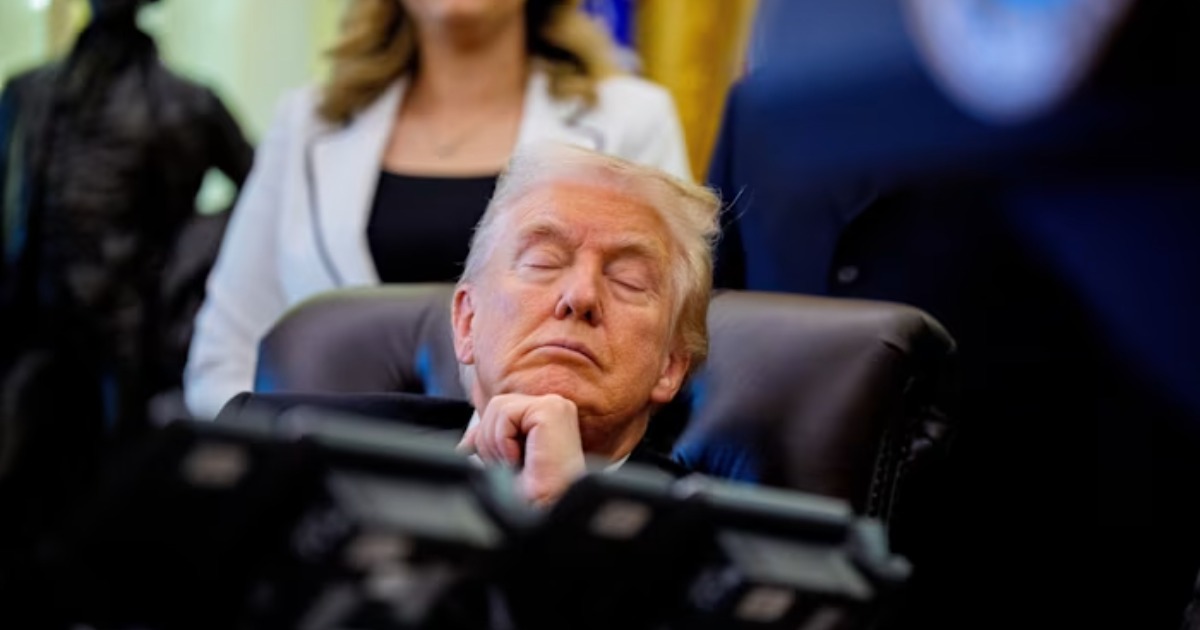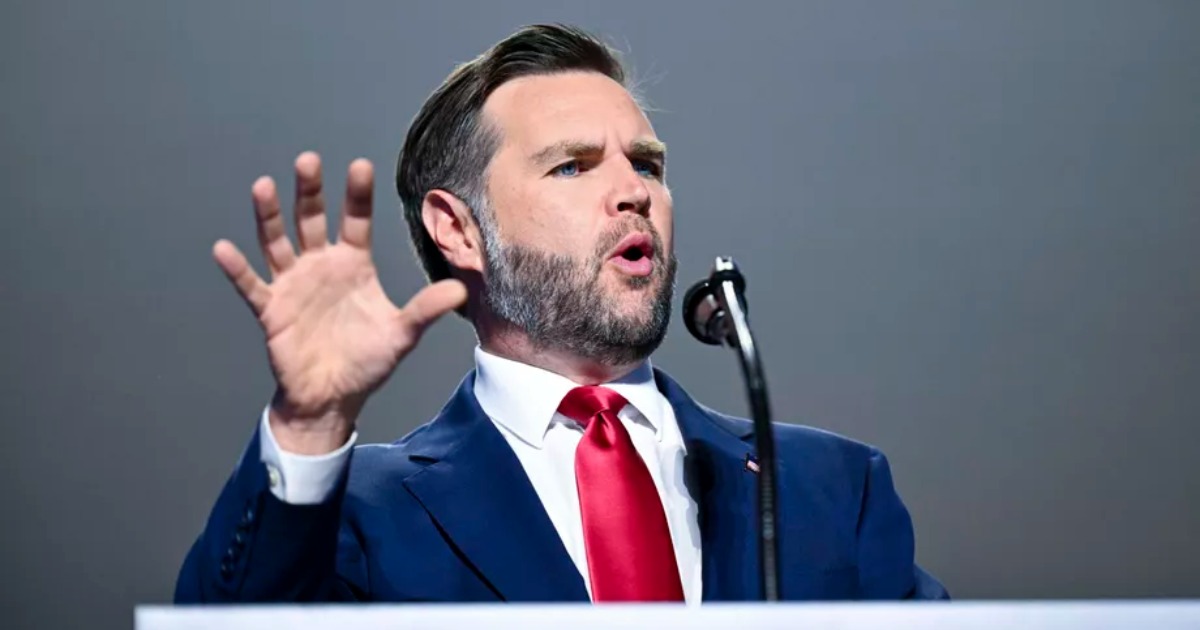

Vice President JD Vance has addressed President Donald Trump's proposal to send $5,000 payments to American adults, responding to questions about how the plan would work and whether it could contribute to inflation.
The proposed payments, which Trump has described as a dividend for American citizens, have attracted significant attention ahead of the November midterm elections.
However, the president has attached an important political condition to the proposal, and the payments have not yet been authorised.
During a Fox News town hall in Fort Worth, Texas, on October 29, Vance was challenged by a voter who questioned how the administration's plan differed from stimulus payments issued during the Covid-19 pandemic.
His response provided further insight into how the administration intends to justify the proposal.
What did JD Vance say about Trump's $5,000 checks?
JD Vance defended the proposed payments by arguing that they would allow Americans to benefit from economic activity and government revenue, rather than representing another round of pandemic-style stimulus spending.
Speaking during the town hall, Vance said Trump's proposal was fundamentally different from previous federal relief payments.
He argued that Americans should be able to retain more of their tax dollars and benefit from economic gains generated by policies designed to encourage manufacturing and investment in the United States.
Vance also criticised spending measures approved during the Biden administration, particularly funding directed towards green-energy projects.
He suggested that revenue generated through penalties and tariffs affecting foreign companies could help support the proposed dividend.
However, his remarks did not establish a payment date, provide a detailed funding mechanism or confirm that the money would be distributed.
Why did Vance compare the checks with Covid stimulus payments?
During the Fox News event, a voter questioned whether sending Americans $5,000 could have similar economic consequences to the stimulus payments distributed during the pandemic.
The question reflected concerns that large-scale government payments could increase consumer demand and potentially contribute to inflation.
Vance argued that the two approaches were different because the administration viewed the proposed dividend as returning economic benefits to Americans.
He also blamed pandemic-era spending under former President Joe Biden for contributing to inflation.
However, economists have debated the relative contributions of government spending, supply-chain disruptions, monetary policy and other factors to the inflation experienced after the pandemic.
Whether a future $5,000 payment would contribute to inflation would depend on factors including how it was funded, its overall cost and broader economic conditions.
Who would be eligible for Trump's $5,000 checks?
Trump has proposed a payment of $5,000 for every adult American citizen.
Based on the wording of his public promise, the intended recipients would be adult US citizens rather than all residents of the country.
However, the administration has not published a final eligibility framework establishing exactly how recipients would qualify.
Important details remain unresolved, including whether there would be income restrictions, how citizenship and age would be verified, and how payments would be handled for people who do not normally file tax returns.
There is also no confirmed application process for the proposed dividend.
Americans should therefore be cautious of websites or messages claiming they can already register for a guaranteed $5,000 payment.
What condition has Trump attached to the payments?
Trump has said the proposed $5,000 dividend depends on Republicans winning both the House of Representatives and the Senate in the 2026 midterm elections.
The president made the promise in September, presenting the payments as a benefit he would deliver if Republicans retained control of Congress.
That means the proposal is directly linked to the outcome of the November elections.
Even if Republicans win both chambers, however, the promise does not automatically authorise the Treasury Department to begin sending checks.
The government would still need an appropriate legal and financial mechanism to distribute the money.
When could Americans receive the $5,000 payments?
As of October 31, 2026, there is no confirmed distribution date for the proposed $5,000 dividend.
The payments remain a political proposal rather than an approved federal benefit.
No official timetable has been established for applications, eligibility checks or transfers to recipients.
Any future programme would need to clarify how the payments would be funded and administered.
Until those details are announced, Americans should not assume the checks will arrive immediately after the midterm elections.
Has Trump started sending letters about three payments?
Separate discussions about federal payments and benefit notices have circulated alongside Trump's proposed dividend.
However, the Wall Street Journal report on Vance's town hall does not establish that Trump has begun mailing letters for three different payments.
It also does not confirm that such letters are connected to the proposed $5,000 dividend.
Americans should distinguish between existing federal benefit programmes, official notices about those programmes and new payments that have merely been proposed.
Receiving a letter about an existing government benefit would not automatically make someone eligible for the $5,000 dividend.
Anyone receiving an unexpected payment notice should verify it through the relevant government agency rather than following unfamiliar links or providing personal financial information.
How would the government pay for the $5,000 checks?
Vance suggested that the proposed payments could be supported by the economic benefits of Trump's trade and manufacturing policies.
He pointed to tariffs and other financial penalties imposed on foreign companies as part of the administration's approach.
Trump has also described the dividend as a way of sharing national economic gains with American citizens.
However, no detailed public funding plan has established how the government would cover the full cost of sending $5,000 to every eligible adult citizen.
The eventual cost would depend on the final eligibility criteria and number of recipients.
Questions about affordability and economic effects would therefore remain important considerations if the proposal moves towards legislation.
What happens next?
For now, the proposed dividend remains dependent on political developments and further government decisions.
Vance's latest remarks show that the administration continues to defend the idea, but they do not amount to confirmation that payments have been approved.
The next major development will be the November midterm elections, followed by any formal legislative or administrative action concerning the proposal.
Until then, Americans hoping to receive a $5,000 check should treat the payment as a proposal rather than money they are guaranteed to receive.
Sources: The Wall Street Journal, Natalie Andrews, October 30, 2026; Fox News town hall with JD Vance, October 29, 2026; White House statement on the proposed Trump Dividend, September 10, 2026.