
Donald Trump sparks backlash after warning Democrats could bring healthcare to everybody
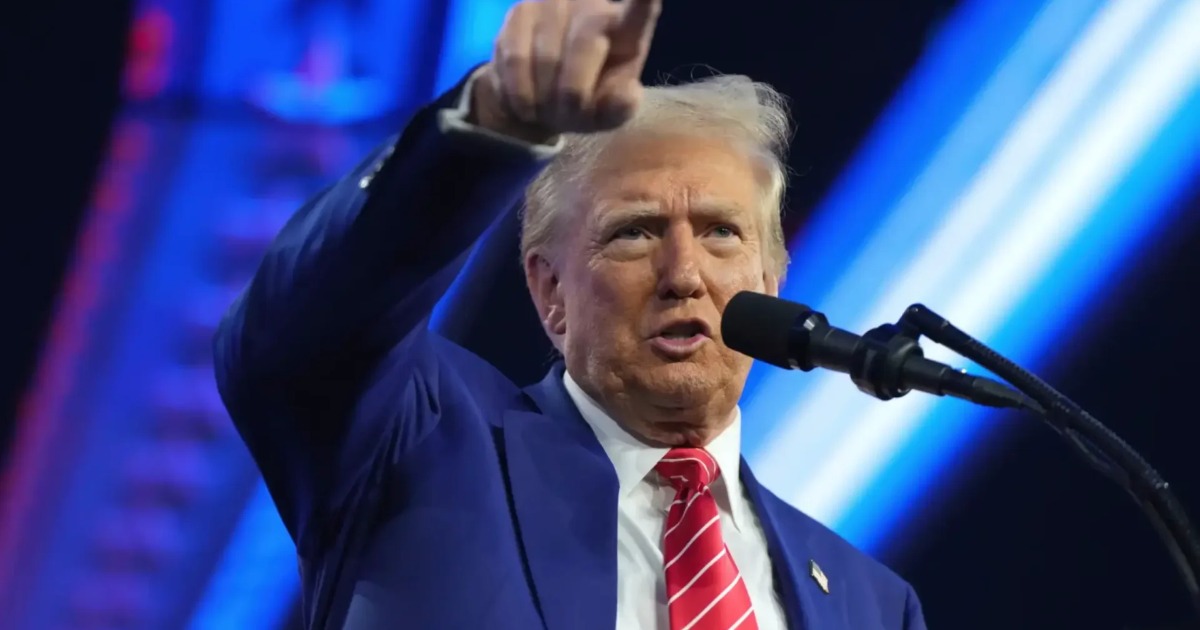
Donald Trump has sparked a fresh wave of reactions online after a video resurfaced in which he warned that a Democratic election victory could result in a healthcare system covering everybody.
The president's remarks have been widely shared ahead of the November 2026 midterm elections, with social media users questioning why the possibility of universal healthcare appeared to be presented as a warning.
A post shared by popular social media account Pubity on October 19 attracted hundreds of thousands of views and numerous responses.
However, there is an important detail about the clip that some viewers may have missed.
What did Donald Trump say about healthcare?
In the resurfaced footage, Trump warned: "If the Democrats win, you're going to be thrown into a system where everybody gets healthcare."
The remark prompted widespread discussion, particularly among people who interpreted the statement as suggesting that expanded access to medical treatment would be a negative outcome.
Some commenters responded sarcastically, questioning why a healthcare system covering everyone should be considered frightening.
Others pointed to the fact that many developed countries already operate universal healthcare systems.
However, the viral footage was not recorded during the current midterm campaign.
When did Trump originally make the comment?
According to reporting by The Poke on October 18, the footage originated in 2024 and has resurfaced ahead of the 2026 midterm elections.
This distinction is important because some social media posts have presented the statement alongside references to the upcoming election without clearly identifying when it was made.
Although the clip is attracting renewed attention in October 2026, it should not be interpreted as a newly delivered warning from the president.
The renewed interest reflects the continuing importance of healthcare in American political debate.
How did social media users react?
The quote quickly became the subject of jokes and criticism on X.
Under Pubity's viral post, one commenter imagined Democrats winning an election and Americans subsequently receiving free healthcare, presenting the supposed warning as an unexpectedly positive outcome.
Another questioned how universal access to medical treatment could be considered a bad thing.
Others used the clip to highlight differences between the American healthcare system and those operating in countries with universal coverage.
Not every reaction focused on Trump personally. Some commenters also questioned whether Democratic leaders would actually introduce a universal healthcare system if they gained power.
The responses illustrate how the same political statement can be interpreted differently depending on viewers' opinions about government-funded healthcare.
Does universal healthcare mean free healthcare?
Universal healthcare generally refers to a system in which everyone can access essential medical services without facing prohibitive financial hardship.
It does not necessarily mean that healthcare has no cost.
Countries fund universal systems through different combinations of taxation, public insurance, mandatory contributions and private payments.
For example, the United Kingdom's National Health Service provides most services free at the point of use, with funding primarily coming from taxation.
Other countries operate insurance-based models that combine public regulation with multiple healthcare providers.
In the United States, coverage is provided through a mixture of employer-sponsored insurance, individual policies and government programmes including Medicare and Medicaid.
The country does not currently have a single universal system covering every resident.
Would Democrats introduce universal healthcare if they won the midterms?
A Democratic victory in the November 3 elections would not automatically establish universal healthcare.
Congress would need to pass legislation, and significant changes could face political, procedural and financial obstacles.
Democratic politicians also differ in their preferred approaches to healthcare reform.
Some support a single-payer system commonly described as Medicare for All, while others favour expanding existing insurance programmes and improving affordability under the Affordable Care Act.
According to Associated Press reporting in October, Democratic leaders have identified restoring Affordable Care Act tax credits and reversing Medicaid reductions among their priorities if they regain control of the House.
Those proposals are not equivalent to immediately establishing universal healthcare.
What is Trump's current healthcare policy?
In January 2026, the White House announced an initiative called the Great Healthcare Plan.
The administration said its approach would focus on reducing prescription drug prices, lowering insurance costs, increasing price transparency and providing financial support directly to patients rather than insurance companies.
Trump has also promoted agreements intended to reduce prescription drug costs within government healthcare programmes.
His administration's approach differs from proposals that would create a single government-funded insurance system.
Supporters argue that competition and changes to insurance payments could reduce costs, while critics have raised concerns about the effects of federal healthcare spending reductions on coverage and access.
Why is healthcare such a major issue in the 2026 midterms?
Healthcare remains a prominent issue because of concerns about insurance premiums, prescription drug prices and access to treatment.
The November 3 elections will determine control of the House of Representatives and a number of Senate seats, influencing which healthcare proposals can advance through Congress.
Even if Democrats secure a congressional majority, major legislative changes could still face opposition from the president and procedural hurdles in the Senate.
For now, the resurfaced Trump clip has become a viral talking point, generating debate over what universal healthcare means and whether Americans should regard expanded coverage as an opportunity or a political concern.
The comment itself may be from 2024, but the questions it has prompted remain central to the country's healthcare debate in 2026.
Sources: Pubity/X, October 19, 2026; The Poke, October 18–19, 2026; Associated Press reporting on Democratic midterm priorities, October 2026; White House, Great Healthcare Plan, January 2026.