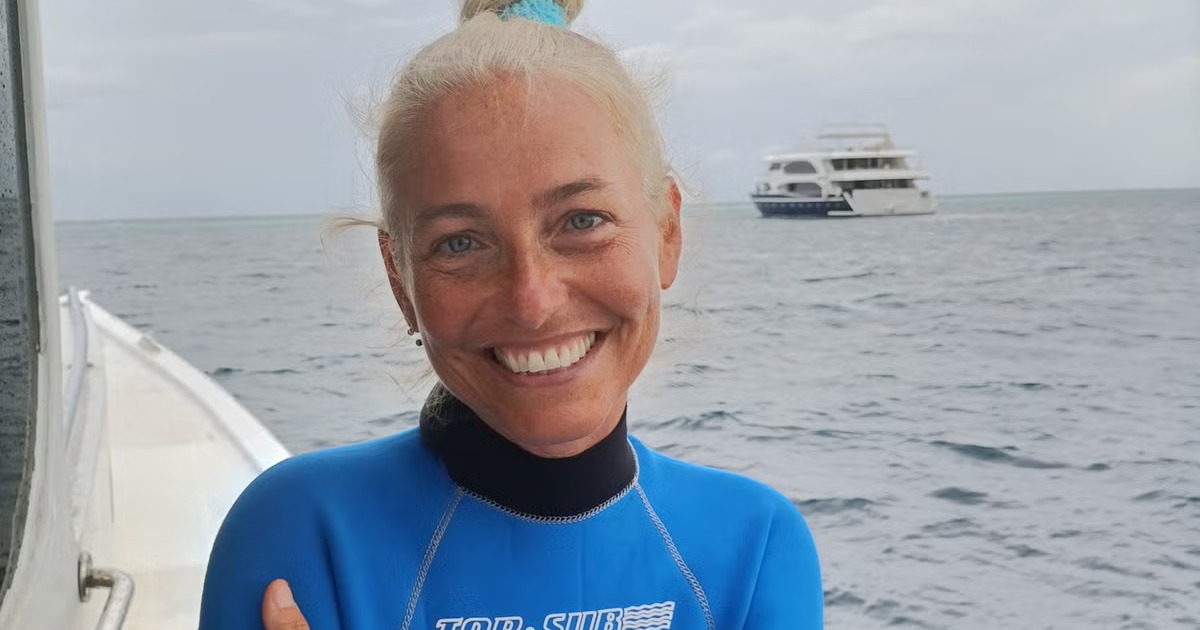
Around 2,000 people gathered in Genoa on Saturday to say farewell to Monica Montefalcone and her daughter Giorgia Sommacal, two of the five Italian divers who lost their lives inside an underwater cave in the Maldives on May 14. Their coffins, covered in white roses, were brought to San Francesco di Pegli church as family, friends, university students and professors filled every seat. Monica's husband Carlo Sommacal said he could barely find the strength to approach the coffins, wanting instead to remember them as they were in life, with their "radiant, sunny smile, full of life."
The other victims, researchers Muriel Oddenino and Federico Gualtieri, were also farewelled in Italy this week, as the country mourned what has been described as the worst single diving accident in Maldivian history. A Maldivian rescue diver, Staff Sergeant Mohamed Mahudhee, also lost his life during the recovery operation, bringing the total death toll to six.
But even as families grieved, new details were emerging that have deepened the mystery surrounding what the group was doing inside the cave, and why they entered without the specialist equipment that cave diving experts consider absolutely essential.
The Maldivian government has now confirmed that three of the five divers, Monica, Muriel Oddenino and Federico Gualtieri, held valid permits to dive to 160 feet for the purpose of sampling coral. However, Giorgia Sommacal and dive instructor Gianluca Benedetti were not named on the research permit the scientists had submitted in February. And crucially, the proposal made no mention of a cave dive at all. As Hussain Shareef, spokesman for Maldivian President Mohamed Muizzu, noted: "The main problem is that it was a cave dive and their research proposal made no mention of it." He also pointed out that corals need sunlight to survive and would not be found deep inside an underwater cave system.
This raises serious questions about what the group's actual plan was when they descended into the cave. The blame game between Maldivian authorities, the University of Genoa and boat operator Albatros Top Boat is intensifying against the backdrop of a culpable manslaughter investigation by prosecutors in Rome. The boat operator has denied any knowledge of or authorisation for a cave dive, and the Duke of York liveaboard's operating licence has been suspended indefinitely.
What makes the equipment question even more puzzling is Monica's extraordinary depth of experience. Research uncovered by Italian newspaper Corriere Della Sera reveals that since 2003 she had published at least four scientific papers involving the collection of marine samples in the Maldives at depths of between 210 and 270 feet, even deeper than the cave where the group died. Since 2006 she had applied for research permits through the University of Genoa at least 34 times. Her husband was emphatic: "My wife certainly didn't go there to sunbathe on the beach. She possessed exceptional expertise."
Finnish rescue diver Sami Paakkarinen, who recovered the bodies, has confirmed the group were not using cave diving gear and had no guide rope. GoPro cameras and dive computers recovered from the scene are now being sought by Italian prosecutors, who hope the footage will finally answer the questions that families, investigators and the diving world are desperate to resolve.